
7 Signs You're Undercharging as a Freelance Copywriter
You just finished a project. It took way longer than you thought. You’re exhausted. And when you look at your invoice, you realize you made less than minimum wage.
Sound familiar?
I’ve been there. In my earlier days, I once spent 12 hours on a $150 project because I didn’t want to ask for more money. When I did the math, I made $12.50 an hour. Less than what I earned working retail in college.
If you’re wondering whether you’re undercharging, here are 7 clear signs and what to do about them.
Quick Check: Are You Undercharging?
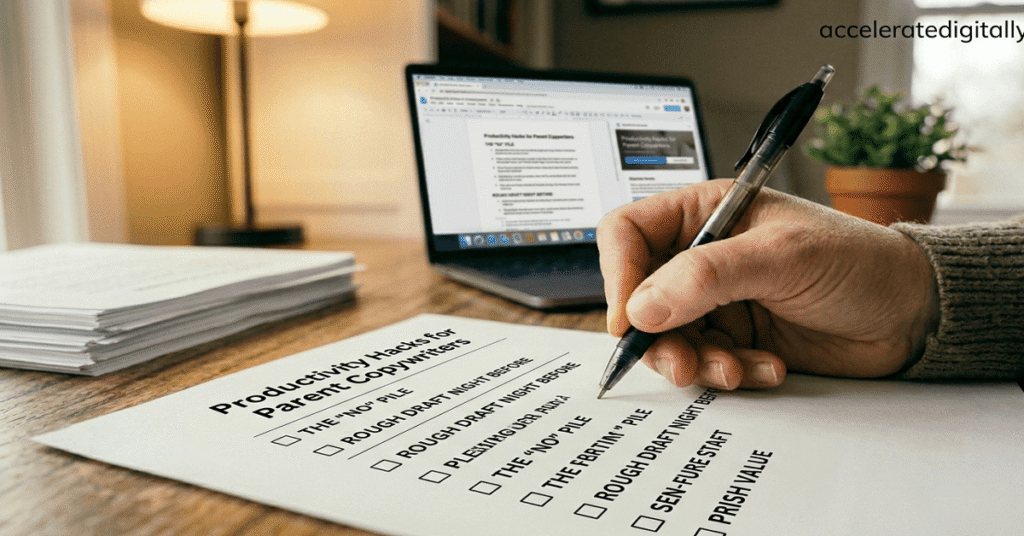
Check any that apply to you:
Clients say yes immediately without negotiating
You’re working 40+ hours a week but barely paying bills
Projects take way longer than your rate justifies
You feel resentful when working on client projects
Other copywriters charge 2-3x more for the same work
Clients ask for “just one more thing” constantly
You avoid telling people what you charge
If you checked 3 or more, you’re definitely undercharging.
Sign 1: Clients Always Say Yes Immediately
What it looks like:
You: “The homepage copy will be $200.”
Client: “Great! When can you start?”
Sounds good, right? It’s not.
Why it’s a problem:
When clients say yes without any hesitation, negotiation (or questions, you’re leaving money on the table. They were probably willing to pay $300-400.
My experience:
I quoted $250 for website copy. Client said “perfect!” within 30 seconds. I immediately knew I should’ve asked for $400 (Shouldn’t I?)
What to do:
Next similar project, raise your rate by 30-50%. See what happens. You’ll be surprised how often they still say yes.
Sign 2: You're Busy But Still Broke
What it looks like:
You’re working full-time hours (40+ hours per week). You have multiple clients. Projects are steady.
But somehow… you’re still struggling to pay rent.
Why it’s a problem:
Volume doesn’t fix bad pricing. If you’re charging $50 for projects that take 3 hours, you’re making $16/hour. Working more just means you’re exhausted AND broke. Isn’t it?
The math that woke me up:
My friend had 8 clients. She was working 50 hours a week. Making $2,000/month. That’s $10/hour.
She could’ve worked at Target and made more money with less stress.
What to do:
Calculate your actual hourly rate: Total earnings ÷ Total hours worked
If it’s under $25/hour as a beginner (or $50/hour after a year), you’re undercharging.
Target rates:
- Beginner (0-1 year): $25-50/hour equivalent
- Intermediate (1-3 years): $50-100/hour equivalent
- Experienced (3+ years): $100-250/hour equivalent
Sign 3: Projects Take Way Longer Than Expected
What it looks like:
You quote $150 for a blog post thinking it’ll take 2 hours. It takes 6 hours because:
- Client needs three revisions
- You had to do way more research than expected
- They kept changing requirements
- You spent an hour just communicating back and forth
Why it’s a problem:
You quoted based on best-case scenario. Reality is always messier. If you consistently underestimate time, you’re consistently undercharging.
What to do (and what I did):
Track your time on the next 5 projects. Be honest about every minute spent (research, writing, revisions, emails, everything).
Then multiply your time estimate by 1.5x for future quotes. This accounts for the unexpected stuff.
Example:
- You think: “This will take 4 hours”
- Quote for: 6 hours (4 × 1.5)
- Reality: It takes 5.5 hours
- Now you’re covered
Sign 4: You Feel Resentful Working on Projects
What it looks like:
You see the client’s name in your inbox and feel… annoyed. Stressed. Like “ugh, I have to deal with this now.”
You’re not excited. You’re not engaged. You’re just grinding through it.
Why it’s a problem:
When you’re undercharging, every project feels like you’re doing them a favor. You start to resent your clients even though they’re not doing anything wrong.
This is your brain telling you: “This isn’t worth what they’re paying.”
My story:
I had a client paying $75 per blog post. Every time they emailed, I felt annoyed. Not because they were difficult (they were actually nice). I just knew I was undercharging and felt trapped.
Once I raised my rates, suddenly I was excited to work with them again.
What to do:
If you dread working for a client, it’s usually a pricing problem, not a client problem.
Ask yourself: “At what price would I be excited about this work?”
That’s probably your real rate.
Sign 5: Other Copywriters Charge 2-3x More
What it looks like:
You charge $200 for homepage copy. You see another beginner copywriter charging $500 for the same thing.
Your reaction: “Are they crazy? Who would pay that?”
Why it’s a problem:
If multiple people charge more than you and they’re getting clients, the market rate is higher than you think.
What to do:
Research what others charge:
- Check Upwork/Fiverr for similar services
- Join copywriter Facebook groups and lurk
- Look at competitor websites (many list rates)
- Ask other writers (most will share honestly)
If you’re 50%+ below average, you’re leaving money on the table.
Reality check:
In 2026, beginner homepage copy typically runs $150-300. If you’re charging $75, you’re undercharging.
How to Fix It: Raising Your Rates Without Losing Clients
Okay, you’re undercharging. Now what?
Step 1: Calculate Your New Rate
Use our free pricing calculator to find a fair rate based on:
- Your experience level
- Project complexity
- Time required
Or use this simple formula:
Desired hourly rate × Estimated hours × 1.5 buffer = Your quote
Example:
- Want to make $50/hour
- Project takes 4 hours
- Add 50% buffer: 4 × 1.5 = 6 hours
- Quote: $50 × 6 = $300
Step 2: Raise Rates for New Clients
Don’t lower rates for existing clients retroactively. That’s awkward and looks unprofessional.
Just charge your new rate for new clients starting now.
Step 3: Gradually Raise Rates for Existing Clients
Wait for a natural break (end of project, new quarter, etc.)
Email them:
Hi [Client],

I'm updating my rates starting [Date]. My new rate for [Service] is $[X].

Your current project is locked in at our original rate. Moving forward, the new rate will apply.

Let me know if you have questions!
Most clients will understand. Some will leave. That’s okay, you’ll replace them with better-paying ones.
Step 4: Don't Apologize
Don’t say: “I’m sorry, but I have to raise my rates…”
Say: “My rates are now $[X] for [Service].”
You’re not doing anything wrong. You’re running a business.
Key Takeaways: Stop Undercharging
✅ If clients always say yes immediately, you’re too cheap – raise rates 30-50%
✅ Busy but broke? Calculate your hourly rate – aim for $25-50/hour minimum
✅ Projects take longer than expected? Add a 1.5x buffer to all quotes
✅ Feeling resentful? That’s a pricing problem – not a client problem
✅ Other copywriters charge 2-3x more? Match the market – you’re leaving money on the table
✅ Clients ask for extras constantly? Set boundaries – charge for scope creep
✅ Embarrassed by your rates? Raise them until you can say them confidently
Bottom line: Undercharging doesn’t help you OR your clients. Charge what you’re worth.
Use Our Free Pricing Calculator
Not sure what to charge? Try Mille (our free calculator) that factors in your experience, project complexity, and time to give you a fair rate. Calculate Your Fair Price